

Two-Car Garages: What To Do When an Xcel Line Is in the Way
If you’re planning a new two-car detached garage in the Twin Cities and there’s an Xcel Energy service line crossing your yard from the alley, clearance can become the #1 design constraint. The good news: in most cases you don’t need to abandon the project—you just need the right roof pitch, placement, and a plan for meeting overhead clearance requirements (often handled by raising the service point, adjusting the span, or adding a support post).
This article covers the common clearance issue, your realistic options, and what to do first so your garage plan doesn’t get delayed by utility coordination.
What clearance is required over a detached garage roof?
Example: A raised service attachment (mast) near the roofline can help achieve required overhead clearance when the service drop is close to the new garage roof.
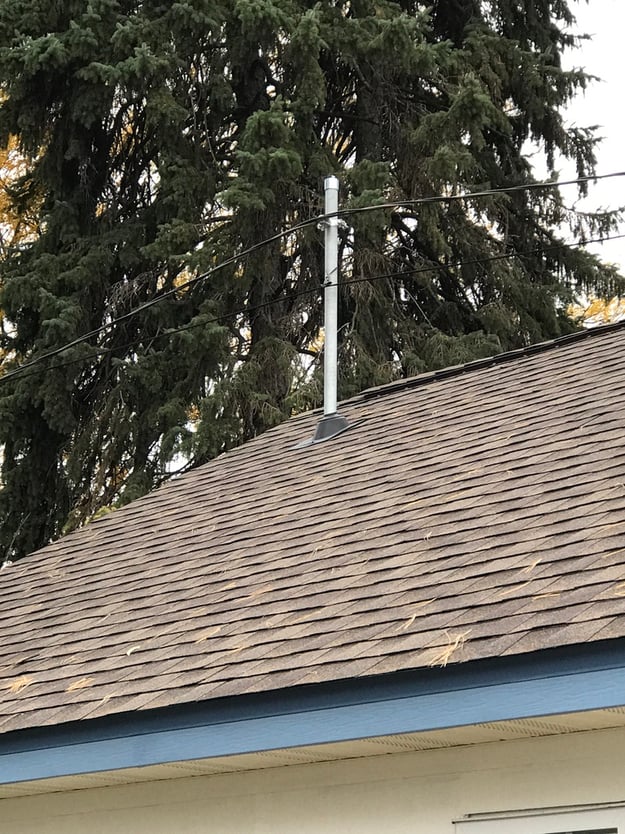
Note: Clearances and approved fixes vary by site. Any changes to the electrical service typically involve a licensed electrician and coordination with the utility.
Overhead electrical conductors must maintain required clearances above structures, including detached garages. The exact requirement can vary based on factors like roof slope, distance from the roof edge, and the type of conductor (service drop vs. other overhead lines).
Important: Clearance requirements are enforced through the local electrical inspection process and the utility’s own standards. Before finalizing your garage placement and roof design, confirm requirements with your local inspector and Xcel Energy (or your utility provider) for your site conditions.
- Roof pitch and where the wire crosses the roof can change the required clearance.
- Multiple lines may be present (electric + cable/phone), but electrical clearance is typically the driver.
- Planning for clearance early can prevent redesigns and permit/inspection issues.
Why this problem happens in Twin Cities alleys
In many Minneapolis–St. Paul neighborhoods, the electric service drop comes from the alley and crosses the rear yard to the house. When you expand from a smaller garage to a new two-car (or go deeper/taller), the new roofline can end up too close to the overhead line.
It’s especially common when:
- The existing garage is smaller and sits lower than the new planned roofline.
- The new garage footprint moves closer to the service drop path.
- The new garage has higher sidewalls, a steeper pitch, or added attic storage.
4 common solutions (ranked by complexity)
Below are the most common ways homeowners solve overhead line conflicts. The “right” solution depends on your existing service location, the line path, roof design, and what the utility will approve.
1) Add a support post (often the simplest)
A properly placed post can raise the overhead line span so it clears the new garage roof. This is often the most straightforward fix when the line is close but not drastically out of position.
2) Raise the electrical mast / service attachment at the house
Raising the service attachment point can increase clearance where the wire crosses the yard and/or roofline. This work typically involves a licensed electrician and coordination with the utility.
3) Mid-span relocation (utility adjusts the wire route)
In some cases, the utility can reroute or adjust the span so the wire crosses a different path. This can be more involved depending on neighborhood layout and existing infrastructure.
4) Move the pole (usually the most complex)
Moving a pole is typically the most expensive and time-consuming option, and it may not be feasible depending on the alley layout, easements, and utility constraints.
Reality check: Utility lead times can be the schedule driver. If clearance is an issue, address it during design—not after the garage is framed.
What to do first (fast checklist before you design)
- Identify the line path: Stand in the alley and take photos showing the wire crossing from the pole to your house.
- Mark the planned garage footprint: Even a rough outline helps reveal if the roofline will conflict.
- Note roof pitch + height goals: Higher walls / attic storage can change everything.
- Collect the basics for a quick answer: Photos, rough measurements, and where you want the new garage.
- Coordinate early: Confirm clearance expectations with your inspector/electrician and plan for any utility coordination.
How Western typically handles this during design + permitting
When overhead clearance is a factor, we plan around it early so your project doesn’t stall mid-permit or mid-build. Typical steps:
- Review alley photos and the service drop path.
- Confirm garage placement and roof design options that improve clearance.
- Recommend the likely fix (post vs. service attachment changes vs. utility work).
- Coordinate the sequence so utility/electrical work doesn’t disrupt construction timing.
Want a quick answer before you redesign?
Send us 3 photos (from the alley, showing the pole, the wire crossing, and your current garage/yard). We’ll tell you the most likely solution and what to expect before your quote appointment.
- Phone: 952-920-8888
- Or: use our contact form and mention “Xcel line clearance.”
FAQ
What’s the minimum clearance from overhead conductors to a detached garage roof?
Clearance rules depend on roof slope, where the wire crosses the roof, and conductor type. Many local guidelines reference minimum clearances in common roof scenarios, but you should confirm your specific requirement with your local inspector and the utility for your site conditions.
Can I build the garage first and deal with the power line later?
It’s risky. If clearances aren’t met you may fail inspection or be forced into costly redesigns. Address clearance and utility coordination during design and permitting.
What’s usually the cheapest fix?
Often, a properly located support post or raising the service attachment point is less expensive than moving a pole or major rerouting—though the right choice depends on your exact line path and what the utility will approve.
Does roof pitch matter?
Yes. Roof pitch and height strongly influence clearance and can change which solutions are practical. This is why we evaluate overhead lines before finalizing the roof design.
Related: Garage Sizes | Garage Construction Cost | Minneapolis Permit Specs | St. Paul Permit Specs